
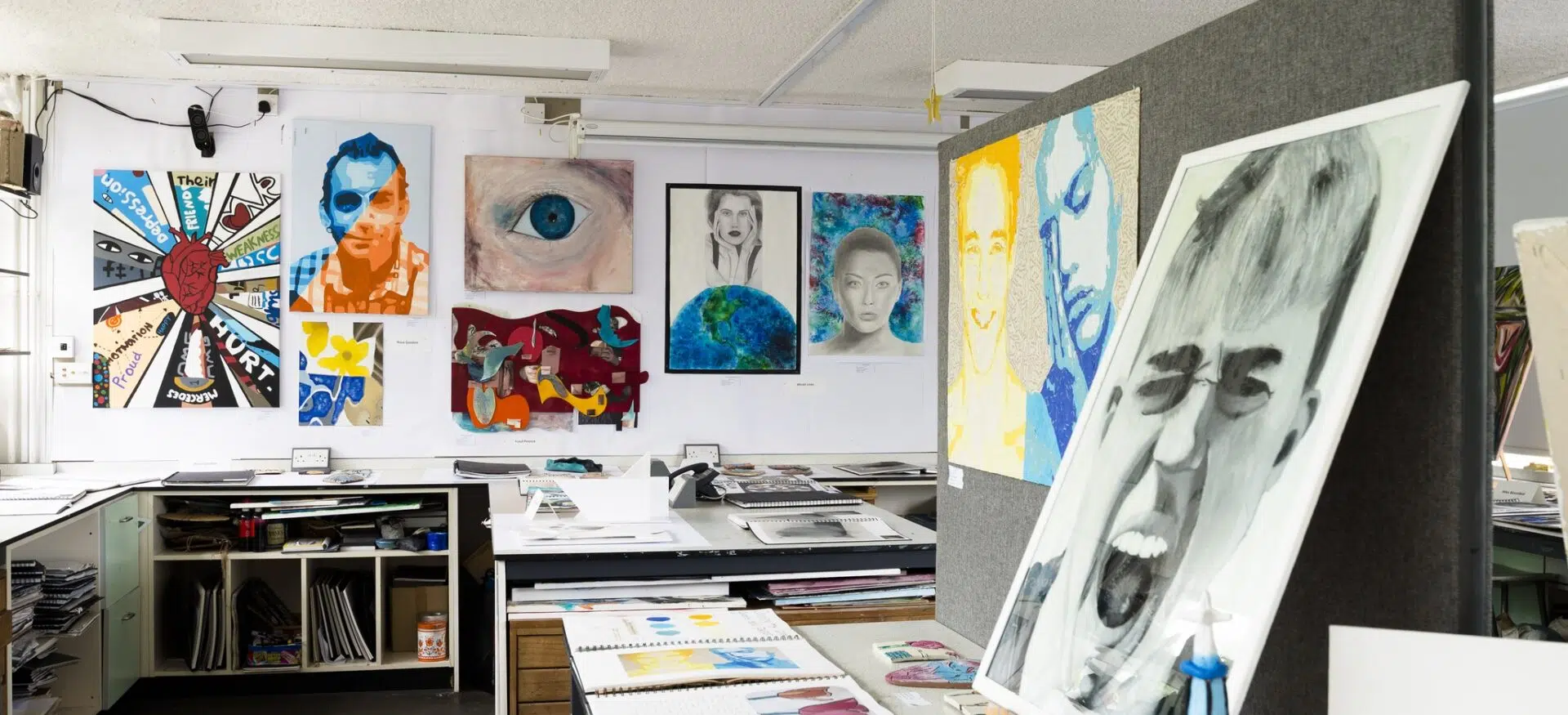
All the creative disciplines encourage problem solving skills and lateral thinking which in turn helps to build confidence and self-esteem. The creative disciplines help you to look at things differently. Pupils are equipped with essential resources that empower them to take ownership of their learning and lead to deeper knowledge and understanding.
GCSE Art and Design
Pupils who choose Art as an option will follow the OCR exam board GCSE course in Art and Design.
GCSE Art in a specialist secondary school is an inclusive and flexible subject that supports students in practical skills that is tailored to their individual needs. It provides an important opportunity for learners to express themselves, particularly for those who may find communication through words more challenging.
The GCSE Art course is carefully adapted to ensure accessibility. Projects are broken down into clear, manageable steps, often supported by visual aids, modelling, and structured guidance. This helps students understand the creative process, from researching ideas and experimenting with materials to producing a final piece.
Students explore a range of techniques and media, which will include drawing, painting, collage, printmaking, photography
An important part of the GCSE studies includes critical studies. Pupils will develop knowledge and understanding of art, craft and design in historical and contemporary contexts and cultures.
We use imaginative and innovative approaches to deliver the curriculum and we make learning both meaningful and interesting. It is essential that any pupil who selects Art & Design should have a passion for the subject.
The Department organises visits for all year groups to visit the rich variety of London’s art galleries and museums. We are fully committed to learning outside of the classroom when the timetable allows.
Throughout each stage of their artistic studies, pupils are introduced to stimulating lesson topics and processes, with opportunities to learn wide ranging skills and techniques.
Learners are encouraged to discuss their achievements through group critiques, one-to-one tutorials and exhibitions of work. This process provides a platform from which pupils can realise their achievements and excel in their creative endeavors.
Assessment Structure
Component 01: Portfolio (non-exam assessment)
- Worth 60% of total GCSE.
- Internally set and assessed; externally moderated.
- Includes a sustained project and other supporting work.
- Must demonstrate all four assessment objectives:
- AO1: Develop ideas with contextual awareness.
- AO2: Refine through experimentation with materials/processes.
- AO3: Record ideas and intentions through drawing, notes or models.
- AO4: Present a final outcome with personal meaning.
Component 02: Externally Set Task
- Worth 40% of total GCSE..
- Paper released in January of the examination year.
- Preparatory period followed by 10 hours of supervised time.
- Students produce a final piece supported by planning and research.
- All assessment objectives must be addressed.
- Internally marked and externally moderated.
GCSE Photography
GCSE Digital Photography is offered at our school, with a focus on editing with Adobe Photoshop. This is an engaging and accessible course that combines creativity with digital skills. It provides students with a modern, relevant way to express themselves while developing a wide range of learning needs. Pupils will have the opportunity to explore a wide range of techniques working mostly with digital imagery. Learning how to use Nikon DSLR cameras, pupils will work on studio shots with lighting as well as urban shots around London.
Clear structure, visual instructions, and step-by-step modelling is essential. Tasks are often broken down into small, achievable stages—for example: taking a photograph, uploading it, making simple edits, and then developing more advanced techniques over time. This approach helps students build confidence and reduces cognitive overload.
Photography itself is highly inclusive. Students can capture images based on their interests, experiences, or surroundings, making the subject personal and motivating. For learners who may struggle with drawing or writing, photography offers an alternative way to communicate ideas and emotions.
Images are edited on Photoshop and Lightroom and occasionally pupils can explore wet photography in the dark room at 6th Form. The emphasis is on investigation including the exciting cameraless photography, creating cyanotypes and chemigrams.
An important part of the GCSE studies includes critical studies and researching the photographic history timeline including contemporary photographers.
The Department organises visits for all year groups across all Key Stages to the rich variety of London’s art galleries and museums. We are fully committed to learning outside of the classroom when the timetable allows.
Through understanding each pupil’s individual learning style, the department focuses on providing appropriate, engaging content and teaching methods conducive to the needs and interests of our learners. Throughout each stage of their artistic studies, pupils are introduced to stimulating lesson topics and processes, with opportunities to learn wide ranging skills and techniques.
Learners are encouraged to discuss their achievements through group critiques, one-to-one tutorials and exhibitions of work. This process provides a platform from which pupils can realise their achievements and excel in their creative endeavors.
Pupils who choose Photography as an option will follow the OCR exam board GCSE course. They will create a Personal Portfolio (Coursework) of work which is Unit 1 and equates to 60% of the final mark. Unit 2 is the Externally Set Task (40%) and culminates in a 10-hour timed test to produce a final piece.
Assessment Structure
Component 01: Portfolio (non-exam assessment)
- Worth 60% of total GCSE.
- Internally set and assessed; externally moderated.
- Includes a sustained project and other supporting work.
- Must demonstrate all four assessment objectives:
- AO1: Develop ideas with contextual awareness.
- AO2: Refine through experimentation with materials/processes.
- AO3: Record ideas and intentions through drawing, notes or models.
- AO4: Present a final 3D outcome with personal meaning.
Component 02: Externally Set Task
- Worth 40% of total GCSE
- Paper released in January of the examination year.
- Preparatory period followed by 10 hours of supervised time.
- Students produce a final piece supported by planning and research.
- All assessment objectives must be addressed.
- Internally marked and externally moderated.
Parent Portal
Parents can find specific curriculum information in their child’s termly ICM reports. These can be accessed via the Parent Portal:
Explore the school

Open Days
To see how our school could support your child, come and meet us at an open day, or explore our Sixth Form to see where the journey can lead.